
There is something fitting about beginning the next chapter of a century-old Dudley farm with work gloves, hand tools and a dumpster.
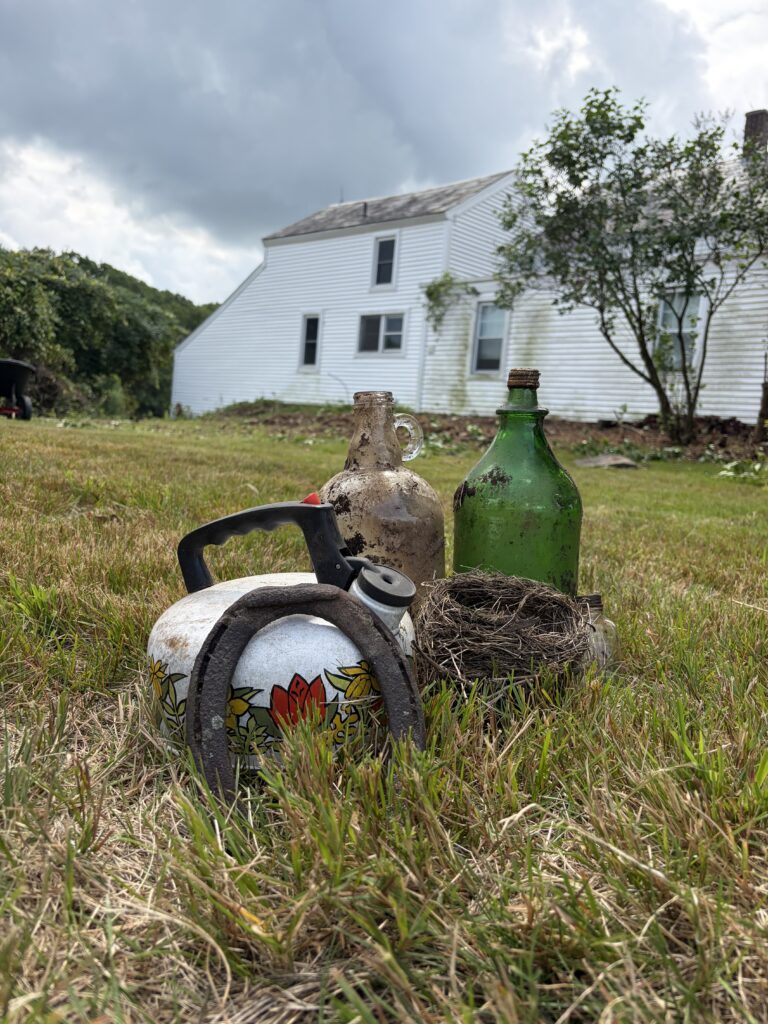
At Antos Farm on Marsh Road, 20 volunteers recently spent a hot summer day doing the decidedly unglamorous work that conservation requires. They cleared trails, cut back invasive plants and overgrown brush, removed debris and began reclaiming the historic farmhouse from vegetation. By the end of the day, they had filled a 15-yard dumpster.
It would be easy to look at such a workday simply as cleanup. What happened at Antos Farm, however, represents something considerably larger.
The property is one of the newest sanctuaries of the Dudley Conservation Land Trust, and this first stewardship day offered a reminder that preserving land does not end when a deed changes hands or conservation protections are secured. In many ways, that is when the responsibility begins.
Protected land needs people willing to care for it.
That means maintaining trails, addressing invasive species, protecting wildlife habitat and making thoughtful decisions about public access. At a property such as Antos Farm,
it also means respecting the human history that exists alongside its natural history.
Those responsibilities can extend for generations.
That is what makes the timing especially appropriate. Antos Farm will mark its 100th anniversary with a community celebration Oct. 3, beginning with a hike along the trails volunteers have been working to reopen.
A centennial naturally encourages people to look backward, but the more important question may be what happens during the farm’s second century.
Dudley is fortunate to have landscapes that still tell something of the town’s story.
Farms, forests, stone walls, wetlands and old homesteads provide connections to earlier generations while also serving very modern purposes. Conserved properties can protect wildlife corridors and habitat, preserve open space and give residents places to walk, explore and experience the natural world close to home.
“Once those places disappear to development, they are extraordinarily difficult, and often impossible, to recover.”
– Webster Times, Stonebridge Press, Editorial
Once those places disappear to development, they are extraordinarily difficult, and often impossible, to recover.
That does not mean every undeveloped acre must remain untouched. Communities need homes, businesses and economic growth. The challenge is ensuring that growth occurs without sacrificing every piece of the landscape that gave a town its character in the first place.
Local conservation organizations play an important role in maintaining that balance.
The volunteers at Antos Farm demonstrated another important part of conservation: Community ownership does not necessarily mean municipal ownership. A community can take responsibility for a place simply because residents decide it is worth protecting and are willing to contribute their time toward that goal.
There was something particularly encouraging about seeing volunteers of different
ages working together. Experienced hands brought knowledge, while younger participants brought energy and the possibility that stewardship will continue long after today’s volunteers have put away their tools.
A hundred years from now, nobody is likely to remember who hauled which branch, cleared which section of trail or helped fill that dumpster.
They may, however, still have Antos Farm.
That is the value of stewardship. Much of the work is temporary. The responsibility is not.
Reprinted with permission from Webster Times, Stonebridge Press, pg. 4, August 14, 2026.